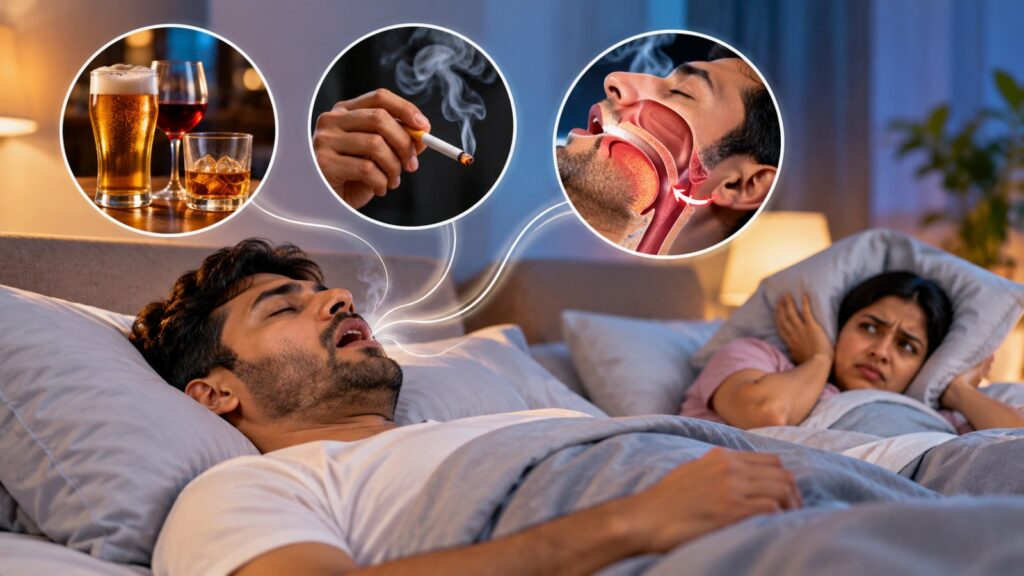
Many people wonder how alcohol, smoking, and snoring are connected. These lifestyle habits can change the way you breathe at night. In fact, they often make snoring worse and can even lead to sleep problems. Understanding how your choices affect nighttime breathing can help you sleep better and feel healthier. Whether you live in New York, Los Angeles, or anywhere else, these facts apply to everyone.
What Is Snoring?
Snoring happens when air cannot move freely through your nose and throat during sleep. As a result, the tissues in your throat vibrate and make a sound. For many, snoring is just a soft noise. However, for others, it can be loud and disturbing. Sometimes, snoring can signal a more serious health problem, such as sleep apnea. Sleep apnea means your breathing stops and starts while you sleep. Although snoring is common, it is not always harmless.
How Alcohol Affects Nighttime Breathing
Alcohol can relax the muscles in your throat and tongue. Because of this, your airway becomes narrower when you sleep. As a result, you are more likely to snore. Even a small amount of alcohol before bed can make snoring worse. In addition, alcohol can make it harder for your body to wake up if your breathing stops. This increases the risk of sleep apnea. According to the CDC, drinking alcohol at night can lower your oxygen levels while you sleep.
The Impact of Smoking on Snoring and Sleep
Smoking irritates the lining of your nose, throat, and airways. Because of this, swelling and mucus can block airflow. As a result, you may snore more often and more loudly. In fact, studies show that smokers are more likely to snore than non-smokers. Even secondhand smoke can increase snoring in children and adults. Over time, smoking can also damage the lungs, making breathing at night even harder.
Combined Effects: Alcohol, Smoking, and Snoring
When you mix alcohol and smoking, the effects on nighttime breathing can be much worse. For example, alcohol relaxes your throat muscles, while smoking causes swelling. Together, these habits can block your airway even more. This makes snoring louder and more frequent. In some cases, you may stop breathing for short periods during sleep. The risk of sleep apnea goes up if you both drink and smoke. According to the WHO, these habits also raise your risk for heart and lung problems.
Recognizing Symptoms and Warning Signs
It is important to notice signs that your nighttime breathing is affected. Often, people ignore snoring, but it can point to bigger problems. For example, you may feel very tired during the day. You might wake up with a dry mouth or sore throat. Sometimes, you may gasp or choke during sleep. If you stop breathing for short times at night, this is a warning sign. Family members may notice loud snoring or pauses in your breathing.
Diagnosis: When to See a Doctor
If you notice these symptoms, it may be time to talk to a doctor. Early diagnosis can help prevent serious health issues. For example, a doctor may ask about your sleep habits and health history. Sometimes, you may need a sleep study. During a sleep study, doctors watch your breathing, heart rate, and oxygen levels while you sleep. This helps them find out if you have sleep apnea or another problem. In many cities, sleep clinics can help you get the right diagnosis.
Treatment Options and Lifestyle Changes
There are many ways to treat snoring and nighttime breathing problems. Often, simple lifestyle changes can help. For example, you can:
Sometimes, doctors may suggest special devices or surgery. However, changing your habits is often the first step.
Prevention Tips for Healthier Sleep
There are steps you can take to prevent snoring and improve nighttime breathing. First, avoid alcohol and smoking, especially in the evening. Next, keep your bedroom air clean and free from smoke. In addition, try to keep a regular sleep schedule. If you have allergies, treat them to keep your nose clear. Consult Dr. Dr. Sai Prateek if snoring continues or gets worse. Good sleep habits can make a big difference in your health and how you feel each day.